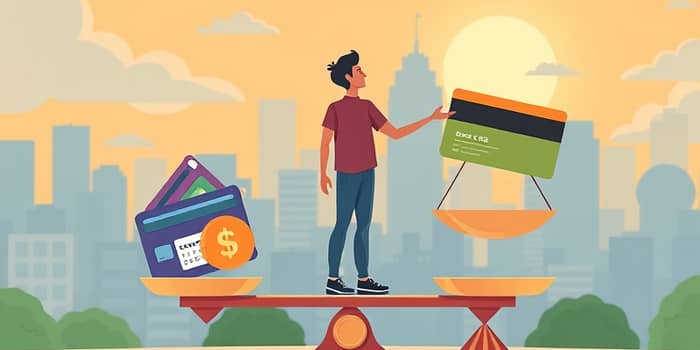
Debt can feel like an anchor on your financial journey, weighing down your hopes and ambitions. Yet with thoughtful planning and disciplined action, that anchor can be lifted. A balance transfer offers a powerful tool to consolidate credit card debts, reduce interest costs, and regain control of your financial narrative. This article will guide you through when to consider a balance transfer, how it impacts your credit, and strategies to ensure a successful payoff—offering both inspiration and practical help.
While the concept of moving debt may seem technical, at its core it represents the possibility of financial freedom. By understanding the mechanics and timing, you can transform scattered balances into a structured payoff plan and accelerate your journey toward a debt-free future.
Key Scenarios and Ideal Conditions
Before applying for a new card, evaluate whether a balance transfer aligns with your current situation. You’ll maximize benefit when specific factors come together in your favor.
- High-interest debt: Your existing APR exceeds 15–20%, and you’re committed to paying off the balance before the promotional period ends.
- Multiple accounts to manage: Combining three or more credit card balances into one simplifies payments and reduces the risk of missed due dates.
- Resolved spending issues: You’ve addressed habits that led to debt accumulation and created a realistic budget with clear monthly goals.
- Stable financial outlook: No major expenses or large loans are planned in the next 12–21 months, ensuring uninterrupted focus on debt reduction.
- Perks and rewards potential: The new card offers valuable cash back, travel points, or other incentives that exceed your current benefits.
If these conditions resonate with your situation, a balance transfer can be more than a financial maneuver—it can become a pivotal moment on your path toward stability and empowerment.
Understanding Credit Requirements
Most 0% introductory APR balance transfer cards are reserved for consumers with good to excellent credit. Knowing where you stand can help set realistic expectations and minimize surprises during the application process.
If your score falls below the ideal range, consider strategies like using a secured card or improving on-time payments before seeking a balance transfer. Checking your FICO® score in advance lets you avoid unnecessary hard inquiries and identify cards aligned with your profile.
Weighing Pros and Cons
No financial tool is without trade-offs. Being fully informed allows you to harness benefits while mitigating risks.
- Interest savings: A 0% intro APR pauses high interest, directing every dollar to your principal.
- Consolidated payments: One due date, one monthly statement, less mental overhead.
- Credit utilization boost: Lower utilization ratio can lift your score over time.
- Faster debt elimination: Focused payments speed up the payoff timeline.
However, balance transfers carry inherent risks that deserve careful attention.
- Transfer fees: Typically 3–5% of the transferred amount, which can add up on large balances.
- Post-promo APR spike: Any remaining balance will revert to the standard, often high, APR.
- Credit impact: New hard inquiry and reduced account age can temporarily dip your score.
- Spending temptation: An increased credit limit may invite new debt if not managed consciously.
Making a Successful Plan
Transforming a balance transfer from an idea into a victory requires discipline and clear milestones. Start by calculating the monthly payment needed to clear your balance within the promotional window. If you’re transferring $6,000 with a 15-month 0% offer, you’ll need to pay at least $400 per month, plus the transfer fee, to finish on time.
Set up automated payments to lock in consistent monthly contributions and avoid late fees. Track your progress visually, celebrating each quarter or milestone reached. By focusing on paying down the principal faster than required, you’ll build momentum and confidence.
Alternative Strategies
If a balance transfer isn’t feasible, don’t despair. Other methods can help you accelerate debt reduction:
- Debt snowball: Pay off the smallest balance first to gain psychological victories and then apply that payment to the next account.
- Debt avalanche: Focus on the highest APR debt first, minimizing total interest paid.
- Personal loans: Fixed rates and terms can offer predictable payoffs without transfer fees.
Each strategy has its own advantages. The key is choosing the one that aligns with your personality, cash flow, and long-term objectives.
Embracing Your Financial Future
A balance transfer is more than a shift in numbers; it’s a declaration of intent. It signals your readiness to break free from high-interest burdens and take steady steps toward long-term goals.
As you embark on this journey, remind yourself that every payment is progress. Each dollar you move off a high-interest card is a small victory toward lasting financial well-being. By combining thoughtful planning, disciplined execution, and an inspired mindset, you can transform the weight of debt into the wings of possibility.
Remember, the road to financial freedom isn’t always linear, but with the right tools and unwavering commitment, you’ll arrive stronger, more confident, and ready to write the next chapter of your story.
References
- https://www.td.com/us/en/personal-banking/learning/what-is-a-balance-transfer-credit-card
- https://www.chase.com/personal/credit-cards/education/credit-score/how-does-balance-transfer-affect-credit-score
- https://www.bankrate.com/credit-cards/balance-transfer/balance-transfer-pros-and-cons/
- https://www.myfico.com/credit-education/blog/balance-transfer-credit
- https://www.tctfcu.org/blog/5-reasons-to-take-advantage-of-a-balance-transfer-credit-card-offer
- https://www.lendingtree.com/credit-cards/articles/balance-transfer-bad-fair-credit/
- https://www.nerdwallet.com/credit-cards/learn/balance-transfers-benefits-drawbacks-alternatives
- https://www.citi.com/credit-cards/balance-transfer/balance-transfer-credit-card-for-fair-credit
- https://bettermoneyhabits.bankofamerica.com/en/debt/how-do-balance-transfers-work
- https://www.equifax.com/personal/education/credit-cards/articles/-/learn/balance-transfers-impact-credit-score/
- https://www.citi.com/credit-cards/balance-transfer/balance-transfer-credit-cards-101
- https://www.citizensbank.com/learning/what-is-a-balance-transfer-credit-card.aspx
- https://www.53.com/content/fifth-third/en/financial-insights/personal/credit-cards/when-does-a-credit-card-balance-transfer-make-sense.html
- https://www.discover.com/credit-cards/card-smarts/balance-transfer-for-bad-credit/