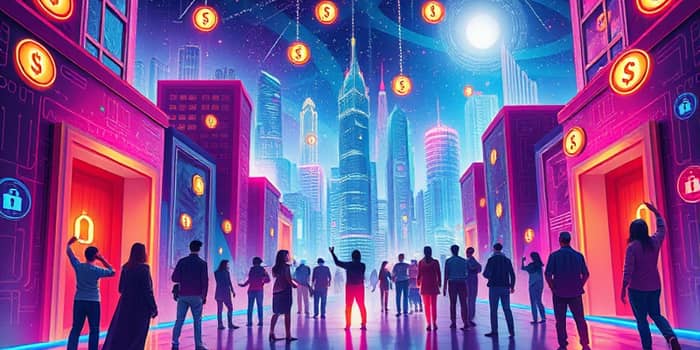
In an era defined by rapid technological evolution, digital tokens have emerged as more than speculative assets—they are the keys to a new realm of possibility. From powering decentralized applications to rewarding community contributions, utility tokens stand at the forefront of innovation, promising to empower decentralized communities worldwide.
As we explore the inner workings of these tokens, you will discover how they unlock services, foster engagement, and shape the future of commerce, governance, and beyond.
Understanding Utility Tokens: Beyond Speculation
At their core, utility tokens are blockchain-based digital assets that provide access to specific functionalities within an ecosystem. Unlike shares in a company or equity-styled investments, these tokens act as digital vouchers, granting holders entry to products, services, or features—often enforced by smart contracts that automatically verify balances and record transactions on the blockchain.
This design ensures transparency, security, and trustless interactions. Whether you’re unlocking premium analytics on an exchange, joining a governance vote, or renting storage space on a decentralized network, utility tokens transform digital rights into tangible experiences.
Core Characteristics That Define Utility
While the landscape of blockchain assets is vast, utility tokens distinguish themselves through a few essential traits that underpin their value proposition and differentiator status:
- Functionality-focused services: Enables voting, resource allocation, or premium access within a platform.
- Project-specific ecosystems: Tied to one platform or dApp, not a medium of broad exchange.
- Incentive and reward mechanisms: Aligns user behavior through discounts, bonuses, and staking rewards.
- Smart contract automation: Governs token flows, fee payments, and feature unlocks without intermediaries.
By centering on utility rather than ownership, these tokens encourage active participation and align incentives across developers, users, and stakeholders.
Distinguishing Token Types
In the broader token economy, you will encounter various categories: coins, security tokens, stablecoins, governance tokens, and non-fungible tokens (NFTs). Utility tokens occupy a unique niche, defined by practical application rather than investment or transactional roles.
This table highlights how utility tokens differ by focusing on service provision rather than financial returns or uniqueness.
Real-World Use Cases Driving Adoption
Utility tokens are already embedded in multiple sectors, delivering real value to users and developers alike. Here are some of the most impactful applications:
- Access to Premium Features: Trading platforms use tokens to unlock advanced analytics and lower fees.
- Fee Payments and Network Tolls: Ethereum’s gas fees are paid in ETH, while Binance users earn discounts with BNB.
- In-Game Rewards and Play-to-Earn: Sandbox (SAND) and Decentraland (MANA) reward user creativity with tokens.
- Decentralized Storage and Computing: Filecoin (FIL) and Golem (GLM) tokenize unused resources for global sharing.
- Governance and Decision-Making: MakerDAO (MKR) and Compound (COMP) allow token holders to vote on protocol upgrades.
Each use case demonstrates how utility tokens seamlessly bridge value and functionality in an open, permissionless environment.
Practical Guidance: Choosing and Using Utility Tokens
Venturing into the world of tokens requires thoughtful research and disciplined practice. Here are steps to ensure responsible and effective participation:
1. Evaluate the Project’s Purpose: Does the token solve a genuine problem? Look for clear use cases, a strong development roadmap, and active community engagement.
2. Understand Tokenomics: Analyze total supply, distribution schedules, and incentive mechanisms. Sustainable models often balance reward with scarcity.
3. Secure Your Assets: Use reputable wallets—hardware or software—and enable multi-factor authentication to protect private keys.
4. Engage in Governance Responsibly: When voting or debating protocol changes, consider long-term community health over short-term gains.
Challenges and Future Outlook
No emerging technology is without obstacles. Regulatory uncertainty, market volatility, and scalability issues can hinder adoption. Yet, innovators continue to push boundaries, unlocking innovative decentralized applications in every sector—from supply chain traceability to on-chain identity solutions.
Looking ahead, utility tokens will play a pivotal role in cross-border remittances, gaming economies, and decentralized finance. They have the potential to bridge the gap to financial inclusion, offering unprecedented access to banking services for the unbanked and underbanked populations worldwide.
By aligning incentives between developers and participants, these tokens lay the foundation for a collaborative digital future—one where value is created, exchanged, and experienced on transparent, trustless platforms.
Conclusion: Embracing the Future of Token Utility
Utility tokens are much more than digital curiosities; they are the building blocks of tomorrow’s decentralized world. Whether you are a developer crafting the next groundbreaking dApp or a user seeking novel ways to participate in global networks, understanding token utility is your gateway to meaningful engagement.
As you journey through this dynamic landscape, remember that tokens derive true power from their future of token-driven economies—networks where collaboration, innovation, and shared purpose redefine how we interact and create value.
References
- https://changelly.com/blog/what-are-utility-tokens/
- https://www.securitytokenizer.io/use-cases-of-tokenization
- https://westafricatradehub.com/crypto/utility-in-crypto-rethinking-what-utility-tokens-actually-do/
- https://sdlccorp.com/post/top-10-use-cases-of-crypto-tokens/
- https://blog.stobox.io/what-is-utility-token-and-how-you-can-use-it/
- https://margex.com/en/blog/top-5-cryptocurrency-use-cases/
- https://kanga.exchange/university/en/courses/beginner-course/lessons/45-what-are-utility-tokens-and-what-use-do-they-have-in-the-cryptocurrency-sector/
- https://taikai.network/en/blog/7-use-cases-for-crypto-tokens
- https://supra.com/academy/utility-tokens/
- https://bitwiseinvestments.com/crypto-market-insights/crypto-use-cases-12-real-world-stories
- https://swapzone.io/blog/utility-token-vs-security-token-crypto-and-security-explained-2025
- https://builtin.com/blockchain/blockchain-applications
- https://www.infuy.com/blog/understanding-different-types-of-tokens-utility-vs-assets/
- https://www.ledger.com/academy/crypto/what-is-the-difference-between-coins-and-tokens
- https://www.ledger.com/academy/fungible-token-categories-explained