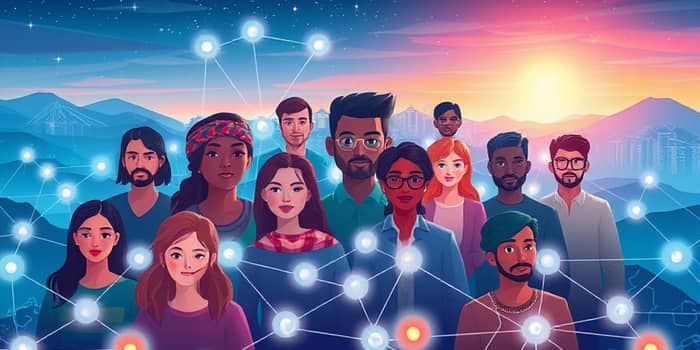
In 2026, the global conversation around social media has shifted dramatically. With over 5.2 billion users on traditional platforms, concerns about data privacy, content control, and censorship have never been more pressing. Enter decentralized social media—an emergent paradigm powered by blockchain, cryptocurrencies, and community governance. This new frontier promises to upend entrenched Big Tech power structures and return digital sovereignty to individual users.
By embracing distributed ledger technologies and novel token systems, decentralized platforms are redefining how we share, monetize, and protect our digital identities. As you read on, you will discover practical insights into key technologies, market dynamics, strategic opportunities, and actionable recommendations to navigate this rapidly evolving space.
A New Era of Digital Sovereignty
The core appeal of decentralized social media lies in its radical shift from corporate control to community ownership. Traditional platforms store content and personal data on centralized servers, subjecting users to opaque moderation and algorithmic manipulation. In contrast, DeSo networks enable decentralized networks vs. traditional control, allowing individuals to truly own their posts, profiles, and digital footprints.
At the heart of this transformation is the blockchain, a transparent, tamper-resistant ledger that records every interaction. By removing single points of failure, DeSo networks deliver censorship resistance and data ownership. Users can publish without fear of arbitrary bans, and developers can create custom applications on open protocols, fostering a vibrant ecosystem of innovation and competition.
Key Technologies Powering DeSo
Several groundbreaking technologies converge to fuel this movement. The AT Protocol, championed by Bluesky, exemplifies the power of open standards. It offers identity portability and custom feeds, ensuring that your social graph and algorithm preferences travel with you, rather than being locked into one company’s walled garden.
Blockchain-based monetization mechanisms introduce new revenue streams. Content creators can earn tokens, NFTs, and digital collectibles, transforming likes and shares into tangible rewards. Smart contracts automate royalties, granting artists and influencers automated, transparent compensation whenever their work is reused or resold.
Privacy-focused networks leverage end-to-end encryption, zero-knowledge proofs, and decentralized messaging protocols. These features protect sensitive conversations and personal data from prying eyes, while transparent governance models enable community-driven policy decisions rather than top-down mandates.
Market Trends and Projections
Although DeSo platforms currently account for over 40 million monthly active users, projections estimate growth to 200 million by 2030. The adjacent decentralized identity market, valued at USD 5 billion in 2026, is set to expand throughout the next decade. Meanwhile, mainstream social platforms continue integrating blockchain features, signaling a broader shift.
These figures underscore a clear demand for alternatives to the status quo. As decentralized platforms mature, innovations in social commerce, AI-driven personalization, and immersive VR experiences will further accelerate adoption.
Emerging Applications and Community Segments
DeSo networks span multiple categories, each addressing distinct user needs. Platforms fall into segments such as:
- User-generated content platforms fostering creativity
- Privacy-focused networks embracing blockchain
- Decentralized messaging and niche community hubs
- Influencer/creator platforms featuring token-based incentives
Applications range from peer-to-peer communication to transparent governance and collaborative content monetization. Early adopters include small communities championing free expression, as well as brands seeking authentic engagement strategies beyond algorithmic feeds.
Challenges and Strategic Recommendations
Despite promising momentum, decentralized social media faces significant hurdles. Slower growth trajectories, as observed with Bluesky’s user acquisition, highlight the challenge of onboarding non-crypto-native audiences. Regulatory uncertainty around token offerings and digital assets also presents risks.
To navigate this landscape, stakeholders should consider the following:
- Invest in user education to demystify blockchain concepts and streamline onboarding.
- Build intuitive, mobile-first interfaces that rival established platforms in usability.
- Foster partnerships with creators and influencers to showcase real-world value.
- Advocate for clear regulatory frameworks that protect users and encourage innovation.
Corporate entities and developers can gain competitive advantage by monitoring market dynamics, pursuing strategic M&A, and leveraging open protocols to create interoperable applications. Communities must also engage policymakers to ensure fair digital public spheres free from monopolistic dominance.
Regional Perspectives and Future Outlook
Growth in decentralized social media will vary by region. North America leads in technology adoption, while Europe’s stringent privacy laws bolster demand for censorship-resistant networks. Asia-Pacific presents the largest user base potential, with a youthful demographic eager to explore novel digital experiences.
By 2028, social commerce powered by blockchain tokenization could account for 20% of e-commerce in Asia, while VR-integrated social platforms may reach 25 million daily users globally. Cross-platform interoperability and community governance will become critical differentiators.
To thrive in this new era, users, creators, and enterprises must embrace the principles of transparency, ownership, and collaboration. By doing so, they will not only secure their digital futures but also contribute to a more equitable and resilient social media ecosystem.
Decentralized social media is more than a technological shift—it is a cultural revolution. As we move beyond the confines of centralized control, we open the door to unprecedented creativity, economic opportunity, and individual empowerment. The frontier is now open; the path you choose will shape the next generation of online interaction and digital community.
References
- https://newmedia.com/blog/social-media-marketing-statistics
- https://getbluepilot.com/blog/social-media-2026-trends
- https://sproutsocial.com/insights/bluesky-statistics/
- https://www.reframetech.de/en/2026/01/27/decentralized-social-media-platforms-as-a-strategic-alternative-to-big-tech-platforms/
- https://www.openpr.com/news/4370738/decentralized-social-media-network-market-outlook-2026-2033
- https://www.statista.com/topics/13332/decentralized-social-media/
- https://www.bertelsmann-stiftung.de/en/our-projects/reframetech-algorithmen-fuers-gemeinwohl/project-news/how-decentralized-social-media-platforms-can-reduce-the-dependence-of-our-digital-public-sphere-on-big-tech
- https://tynmagazine.com/decentralized-identity-market-2026-2035/