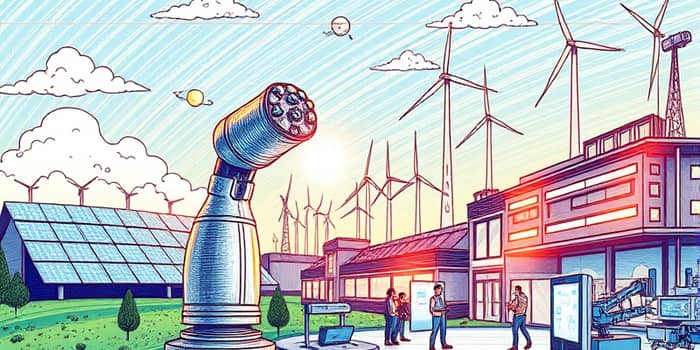
The pace of innovation and shifting global priorities have converged to create unprecedented opportunities across multiple fronts. Whether you are an investor, entrepreneur, or career professional, understanding the next wave of explosive growth industries is crucial. This article maps out the key sectors poised to shape the coming decade and offers a practical roadmap to harness their potential.
The Forces Shaping Tomorrow’s Markets
At the core of future growth are transformative technologies and societal shifts. From breakthroughs in machine learning to groundbreaking renewable projects, these forces are aligning to redefine how we live, work, and invest.
Major drivers include AI integration across business processes and policy support such as the CHIPS Act, empowering domestic semiconductor capacity. Surrounding these are climate commitments and ESG demands that accelerate investment in clean energy. Demographic trends, especially aging populations and chronic disease burdens, propel healthcare innovation. Meanwhile, reshoring strategies and automation investments revitalize manufacturing bases in the United States.
Underlying all of this is a wave of post-pandemic digital transformation momentum, where organizations streamline operations and embrace remote solutions. Declining technology costs, paired with federal policy incentives and supportive legislation, set the stage for sustained expansion beyond traditional cycles.
Spotlight on Key Growth Industries
Below is a snapshot of the top five sectors positioned for exceptional growth between 2026 and 2030, highlighting projected compound annual growth rates and market size forecasts.
The AI and technology sector stands out with near-30% CAGR driven by enterprises embedding intelligent systems into every facet of operation. Semiconductor capacity will surge thanks to targeted federal funds, further bolstering data center growth and cloud services.
Renewable energy and CleanTech are riding a wave of environmental urgency and improved efficiencies. Solar, wind, battery storage, and modernized grids are expanding at an astonishing pace. Corporations and governments alike are committing trillions toward a low-carbon future.
In healthcare and biotech, aging demographics and chronic care needs fuel demand for telehealth, remote patient monitoring, and personalized medicine. Cell and gene therapies, along with AI diagnostics, promise radical improvements in treatment outcomes.
Advanced manufacturing is reborn through a synergy of reshoring incentives and smart factory solutions. Robotics, IoT sensors, 3D printing, and cloud-based analytics combine for higher precision, lower costs, and flexible supply chains.
E-commerce and its logistics backbone continue to scale globally, propelled by digital payment systems and automated warehouses. The shift toward online retail is carving new retail landscapes, from on-demand delivery to virtual storefronts.
Beyond these pillars, supporting sectors like cybersecurity, FinTech, blockchain, and next-generation connectivity play pivotal roles. Cybersecurity is critical as AI and IoT deployments expand attack surfaces. FinTech innovations streamline payments and lending, while blockchain technology enhances transparency and trust. High-speed 5G networks enable real-time data exchange, powering smart factories and telemedicine applications across the globe.
Building a Practical Roadmap for Stakeholders
Navigating these dynamic industries requires strategic focus, continuous learning, and disciplined execution. Stakeholders must identify the areas where they can add the most value and remain agile as market conditions evolve.
- Invest in Continuous Learning: Acquire skills in AI, data analytics, and clean energy technologies through workshops, certifications, and advanced degrees.
- Forge Strategic Partnerships: Collaborate with startups and research institutions to pilot innovations and share risk in R&D efforts.
- Align with Policy and Incentives: Leverage government grants, tax credits, and public-private programs to accelerate project timelines and reduce costs.
- Diversify Across High-Growth Niches: Balance exposure to core segments like AI and clean energy with emerging areas such as biotech and smart manufacturing.
- Adopt Agile Practices: Implement iterative project management and rapid prototyping to stay ahead of market shifts and regulatory changes.
For businesses, integrating real-time data analytics for manufacturing can dramatically improve uptime and output quality. Healthcare providers should explore AI-driven diagnostics to expedite patient care while reducing costs.
Investors can seek exchange-traded funds and private equity vehicles focused on high-growth sectors. Individuals may pursue certifications in cybersecurity, cloud architecture, or renewable energy project management to tap into expanding job markets.
Balancing Optimism with Disciplined Execution
While the outlook for these industries is overwhelmingly positive, it is essential to remain vigilant against headwinds. Regulatory uncertainty in biotech, price fluctuations in raw materials, and potential geopolitical disruptions can impact growth trajectories.
Organizations must prioritize risk management, scenario planning, and robust governance frameworks. Continuous monitoring of market indicators—such as funding trends, policy updates, and technological breakthroughs—will ensure agile responses.
Conclusion: Seizing the Future Today
We stand at the threshold of a new era defined by intelligent machines, sustainable energy systems, advanced medical breakthroughs, and revitalized manufacturing. Each of these sectors offers more than just financial returns; they represent the building blocks of a resilient, equitable, and prosperous future.
By understanding the key drivers, committing to continuous innovation, and embracing disciplined strategies, stakeholders at every level can participate in this historic transformation. The path forward is clear: identify the growth engines, cultivate essential skills, and act decisively. The industries of tomorrow await those bold enough to shape them.
References
- https://www.synovus.com/corporate/insights/market-industry-insights/top-american-industries-2026
- https://www.hubspot.com/startups/reports/hypergrowth-startups/fastest-growing-industries
- https://qubit.capital/blog/high-growth-startup-sectors
- https://insightglobal.com/blog/fast-growing-industries-jobs/
- https://www.market-xcel.com/us/blogs/fastest-growing-industries-usa
- https://www.deloitte.com/us/en/insights/industry/manufacturing-industrial-products/manufacturing-industry-outlook.html
- https://www.uscareerinstitute.edu/blog/The-Fastest-Growing-and-Fastest-Declining-Industries-in-the-United-States
- https://www.bls.gov/ooh/fastest-growing.htm