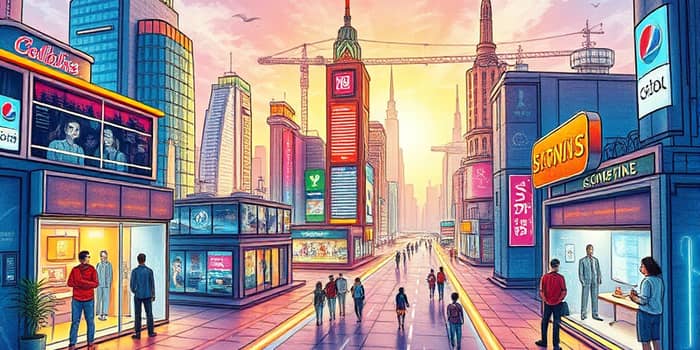
As the metaverse expands beyond niche experiments into mainstream adoption, it emerges as a transformative force reshaping global economies and social interactions. From early virtual reality prototypes to fully immersive digital universes, this ecosystem is not merely a futuristic concept but a rapidly evolving reality. Fueled by breakthroughs in XR hardware, blockchain innovations, and dynamic AI, the metaverse is set to redefine how individuals shop, work, learn, and socialize.
By integrating economic models directly into virtual experiences, businesses and creators can unlock unprecedented opportunities for growth, collaboration, and value creation. In this article, we explore the current market landscape, historical developments, asset classes, commerce frameworks, technological enablers, and future outlook that collectively illuminate the path toward a vibrant metaverse economy.
As this frontier matures, it will redefine value creation, blending social engagement with transactional frameworks that reward participation. Navigating this terrain requires a holistic understanding of market dynamics, asset liquidity, and the underlying technologies that enable secure, transparent interactions.
Market Growth and Economic Impact
Recent forecasts indicate that the metaverse market was valued between $82 billion and $95 billion in 2023, with projections estimating up to $1.3 trillion by 2032. This momentum is underpinned by a CAGR of 46.4% from 2025-2030, reflecting aggressive investments in immersive platforms, user engagement, and digital assets. Alternative analyses suggest even steeper curves, with values exceeding $5.6 trillion by 2035 at a 41.4% CAGR.
- Business metaverse segment growing from $70.4B to $250.6B by 2030.
- Potential 2.8% contribution to global GDP within ten years.
- 25% of people spending at least one hour per day in virtual worlds by 2026.
These trends highlight a pivotal shift: what was once experimental now promises new economic paradigms in virtual spaces, enabling firms to diversify revenue streams and engage audiences in immersive environments.
Equally important is the adoption by global workforces and educational institutions. Forecasts indicate that by 2026, one in four people will dedicate at least an hour each day to virtual activities, ranging from vocational training to immersive collaboration sessions. With immersive hardware and digital identity becoming more accessible, the metaverse is poised to disrupt conventional models of productivity and learning.
Historical Evolution
The journey from 2020 to 2025 focused on laying the groundwork for mass adoption. During this phase, companies invested heavily in infrastructure—building robust networks, refining XR headsets, and experimenting with early Web3 protocols. Gaming experiences served as the primary proving grounds, demonstrating live concerts, virtual goods, and avatar customization as commercially viable offerings.
As we transition into the 2026-2030 window, termed the commercial adoption phase, emphasis shifts to performance and scalability. With improved latency over 5G networks, advanced digital identity management, and interoperable blockchain ledgers, enterprises will confidently launch virtual storefronts, training modules, and collaborative workspaces designed to operate at global scale.
Leading technology companies and pioneering startups have already demonstrated the metaverse’s promise. Virtual brand activations, remote surgery simulations, and university campuses hosting thousands of students have all contributed to an ecosystem where experimentation fuels innovation and informs real-world applications.
Virtual Assets as the New Asset Classes
By 2030, virtual assets will mature into distinct investment and utility classes. These digital holdings will span a spectrum of categories, each offering unique value propositions:
- Virtual real estate: Prime land parcels in popular metaverse platforms, driving development, events, and speculative holdings.
- Avatars and wearables: Status-symbol fashion items, branded cosmetics, and exclusive accessories.
- Tokenized assets and collectibles: Limited-edition art, music, and memorabilia underpinned by provenance.
- AI-generated content: Personalized and adaptive environments, items, and NPCs created on demand.
- Digital currencies and payment tokens: Facilitating frictionless transactions across economies, simplifying cross-border trade.
- IP-backed NFTs: Verifiable ownership models with automated royalty streams for creators.
These developments signal a profound change in how individuals perceive and manage value, as ownership transitions from physical to digital realms.
As these asset classes gain traction, they will attract diverse investor profiles, from retail enthusiasts to institutional funds. Strategies such as fractional ownership and rent-to-own schemes will lower entry barriers, enabling broader participation and deeper liquidity in virtual markets.
Marketplaces and Commerce Models
The evolution of digital marketplaces mirrors real-world commerce, yet introduces novel structures tailored to virtual contexts. Ecosystems now host business-to-consumer (B2C), consumer-to-consumer (C2C), and enterprise marketplaces. Emerging niches include creator-centric platforms that allow artists and designers to monetize directly, as well as hybrid shops blending physical and digital merchandise.
As these sectors converge, consumers will benefit from highly personalized, context-aware shopping and service experiences previously unattainable in two-dimensional online interactions.
Subscription-based access to premium virtual experiences and pay-to-own or rent-to-own models for high-value items will introduce stable revenue streams for creators and platforms. This approach mirrors emerging trends in Web3 commerce and ensures ongoing engagement rather than one-time transactions.
Driving Technologies and Enablers
The metaverse’s ascent relies on several interlocking technologies:
- AI synergy: Procedural world-building, adaptive NPCs, and content personalization that reduce production overhead.
- XR hardware advancements: Lighter head-mounted displays, wider fields of view, and haptic feedback for extended sessions.
- Scalable blockchain networks: Faster transaction throughput, reduced fees, and secure digital identity frameworks.
- Next-gen connectivity: 5G/6G low-latency networks supporting seamless multi-user environments.
- Spatial computing and digital twins: Integrating physical infrastructure with virtual counterparts for real-time simulation and analytics.
Regulatory frameworks will evolve in parallel, addressing taxation, consumer protection, and intellectual property rights. International standards organizations and industry consortia are collaborating to establish guidelines that safeguard participants while fostering innovation across borders.
Together, these pillars empower developers, brands, and individuals to build experiences that blur the lines between reality and simulation.
Looking Ahead
By 2030, the metaverse will not simply be an extension of digital platforms, but a parallel economy with its own marketplaces, governance models, and social norms. We will witness the coexistence of virtual and physical spheres, where consumers seamlessly transition between shopping in a holographic mall and attending remote office meetings in a shared VR space.
For businesses and creators, the imperative is clear: embrace innovation early, forge strategic partnerships, and cultivate communities that value authenticity and interactivity. From securing early positions in virtual real estate to developing exclusive digital collections, stakeholders can capitalize on this rapidly expanding frontier.
Success in the metaverse era will hinge on continuous learning and agility. Companies should invest in digital skills development, community engagement strategies, and cross-industry partnerships to remain competitive. Individuals can seize new career pathways in virtual design, asset management, and experience engineering, driving both personal and collective growth.
Ultimately, the metaverse represents more than a technological milestone; it's a social and economic revolution that invites every stakeholder to co-create its future. By embracing experimentation, prioritizing inclusivity, and upholding transparent governance, we can ensure this digital evolution benefits all participants and unlocks the full spectrum of human potential.
References
- https://www.timesofblockchain.com/price-prediction/metaverse-economy-forecast-2026-2030/
- https://www.sganalytics.com/blog/shopping-playing-or-working-how-will-you-be-spending-your-time-in-the-metaverse-in-2026/
- https://www.weforum.org/stories/2022/03/hour-a-day-in-metaverse-by-2026-says-gartner/
- https://www.insightaceanalytic.com/report/metaverse-market/1663
- https://www.analysisgroup.com/Insights/publishing/the-potential-global-economic-impact-of-the-metaverse/
- https://tech.einnews.com/pr_news/896047864/in-depth-analysis-of-the-business-metaverse-market-key-opportunities-and-challenges
- https://www.startus-insights.com/innovators-guide/metaverse-outlook/
- https://www.kasunsameera.com/metaverse-technology-2026-reality-progress-and-limits