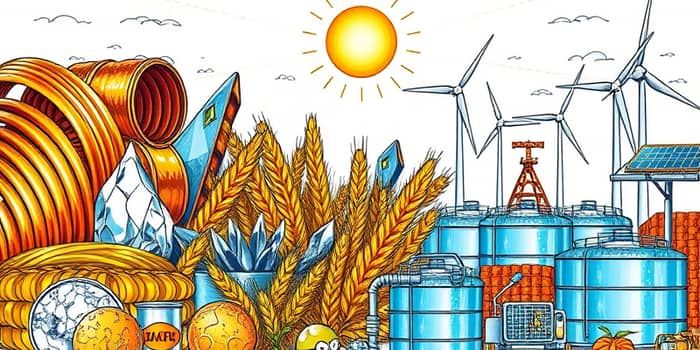
Raw materials enter 2026 on a wave of optimism, driven by evolving demands and strategic global shifts. From green technology metals to stabilized agricultural markets, structural shifts like green tech are redefining long-term value. Investors and industry leaders alike can seize these real opportunities in raw materials by understanding trends across energy, metals, agriculture, and policy.
This article explores the multifaceted landscape of commodity markets, examines key drivers, and offers actionable insights. By contrasting energy softness with the surge in metals demand, and highlighting geopolitical and policy catalysts, we map out how stakeholders can adapt and thrive.
Outlook Overview
Entering 2026, commodities present a nuanced picture. Energy markets face an abundant supply environment, while metals benefit from the energy transition. Agriculture shows signs of stability after years of volatility. Across all sectors, heightened geopolitical tensions and security remain a backdrop, influencing trade flows and investment decisions.
Policy measures—from infrastructure spending to carbon border adjustments—add further layers of complexity. Yet, these same policies can become levers for those who anticipate changes and position accordingly.
Energy Market Softness
The global oil and gas sector contends with abundant supply outpacing demand. In 2026, crude oil production exceeds consumption, pressing Brent crude towards a forecast average of $62 per barrel. While OPEC cuts and strategic reserves buying provide some support, a broadly bearish tone persists.
Liquefied natural gas (LNG) also grapples with a glut. New capacity additions totaling 29 million metric tons—from US, Qatar, Australia, Mexico, and Africa—drive spot prices down. Only post-2030 decarbonization demand growth in China offers a silver lining.
- Brent crude: $62/bbl average, modest upside
- LNG new capacity: 29 million metric tons of supply
- OPEC and US production cuts temper downside
Metals: The Growth Engine
Industrial and critical metals stand at the forefront of green demand. Electric vehicles, renewable energy installations, and data centers are powering a structural shift. Copper, in particular, swings into a one-million-ton deficit ex-US, underpinning an $11,400 price forecast.
Base metals such as aluminum and tin remain stable or modestly rising after the 2025 rally. However, some non-critical metals like aluminum are expected to soften by 19% by end-2026, pressured by Chinese overseas projects. Despite this, copper and aluminum continue to benefit from widespread electrification and lightweight materials trends.
- EVs and batteries fueling copper and nickel demand
- Renewable energy grids driving aluminum use
- Data center expansion boosting metal consumption
Agriculture and Food Stability
After a decade of volatility, agricultural markets show stability after the 2020s volatility. Ample grain supplies—particularly wheat and corn—have eased prices, while expanding demand for protein, biofuels, and plant-based alternatives offers growth avenues.
Forecast wheat production of 87 million tons underscores ample supply, suggesting grain prices may have bottomed. Meanwhile, rising incomes in emerging markets and diet diversification drive higher-value crop demand, presenting opportunities in specialty grains and agricultural technology.
Geopolitics and Policy Drivers
Geopolitical tensions and resource security concerns shape commodity strategies. The US-China rivalry fuels commodity control cycles and export restrictions, seen in rare earths, cobalt, and copper. Countries are stockpiling, forging bilateral agreements, and diversifying suppliers to mitigate risk.
On the policy front, industrial subsidies, infrastructure spending, and carbon border adjustments (CBAM) are redrawing trade patterns. EU carbon allowances average €85 per tonne, and CBAM imposts over €12 billion of costs on steel, aluminum, cement, and fertilizer imports, incentivizing decarbonized production models.
Risks and Adaptive Strategies
Despite promising trends, risks abound. Geopolitical shocks, extreme weather, and supply chain disruptions can trigger volatility. Energy market oversupply may persist longer than expected, and rapid policy changes can unsettle planning horizons.
To navigate uncertainty, stakeholders should adopt adaptive strategies:
- Diversify supply sources across regions and tiers
- Invest in technology for improved resource efficiency
- Monitor policy developments and anticipate regulatory shifts
Key Commodity Metrics at a Glance
The following table summarizes essential figures and drivers to track in 2026:
Conclusion: Seizing Real Opportunities
Commodities in 2026 offer a landscape of contrasts: energy markets cool while metals heat up, agriculture stabilizes, and geopolitics intensify. Recognizing these patterns empowers businesses, investors, and policymakers to position for growth.
By aligning strategies with energy transition demand for metals, diversifying across sectors, and staying agile in the face of policy shifts, stakeholders can transform uncertainty into advantage. The future of raw materials is being reshaped by innovation, cooperation, and adaptability—real opportunities await those ready to act.
References
- https://www.morganstanley.com/im/de-de/intermediary-investor/insights/outlooks/trends-driving-optimism-in-2026.html
- https://www.fastmarkets.com/insights/key-topics/commodity-market-outlooks/
- https://home.cib.natixis.com/articles/commodities-markets-exploring-key-themes-for-2026
- https://unctad.org/news/10-trends-shaping-global-trade-2026
- https://about.bnef.com/insights/commodities/commodities-in-2026-10-numbers-to-watch-from-power-to-oil/
- https://think.ing.com/bundles/commodities-outlook-2026-energy-cools-as-metals-heat-up/
- https://www.spglobal.com/market-intelligence/en/news-insights/research/2026/01/commodity-price-watch-january-2026